Every rider planning Ladakh eventually lands on the same forum argument: Manali Leh vs Srinagar Leh. One camp swears by the high passes out of Himachal. The other points out, reasonably, that they would like to arrive in Leh with a functioning brain. Both camps are right, which is the annoying thing about mountains.
Here is how the two roads actually compare, from someone who has been humbled by each in its own special way.
Manali Leh vs Srinagar Leh at a glance
| Srinagar to Leh (NH1) | Manali to Leh | |
|---|---|---|
| Distance | About 434 km | About 428 km, via the Atal Tunnel |
| Highest point | Fotu La, 13,478 ft | Tanglang La, 17,480 ft |
| Usual overnight | Kargil, 8,780 ft | Jispa (10,500 ft) or Sarchu (13,783 ft) |
| Surface | Mostly sealed tarmac, subject to BRO roadworks | Tarmac, broken stretches, water crossings early in the season |
| Fuel | Towns all the way | Karu is the first reliable pump north of Tandi |
| Season | Opens earlier, closes later | Opens later, closes first |
The distances are almost identical. Almost nothing else is.
Srinagar to Leh: the gentle climb, relatively speaking
The Srinagar road climbs out of the Kashmir valley to Sonamarg, crosses Zoji La at about 11,575 ft, and drops into Drass, one of the coldest inhabited places on Earth. Then Kargil for the night, at a civilized 8,780 ft.
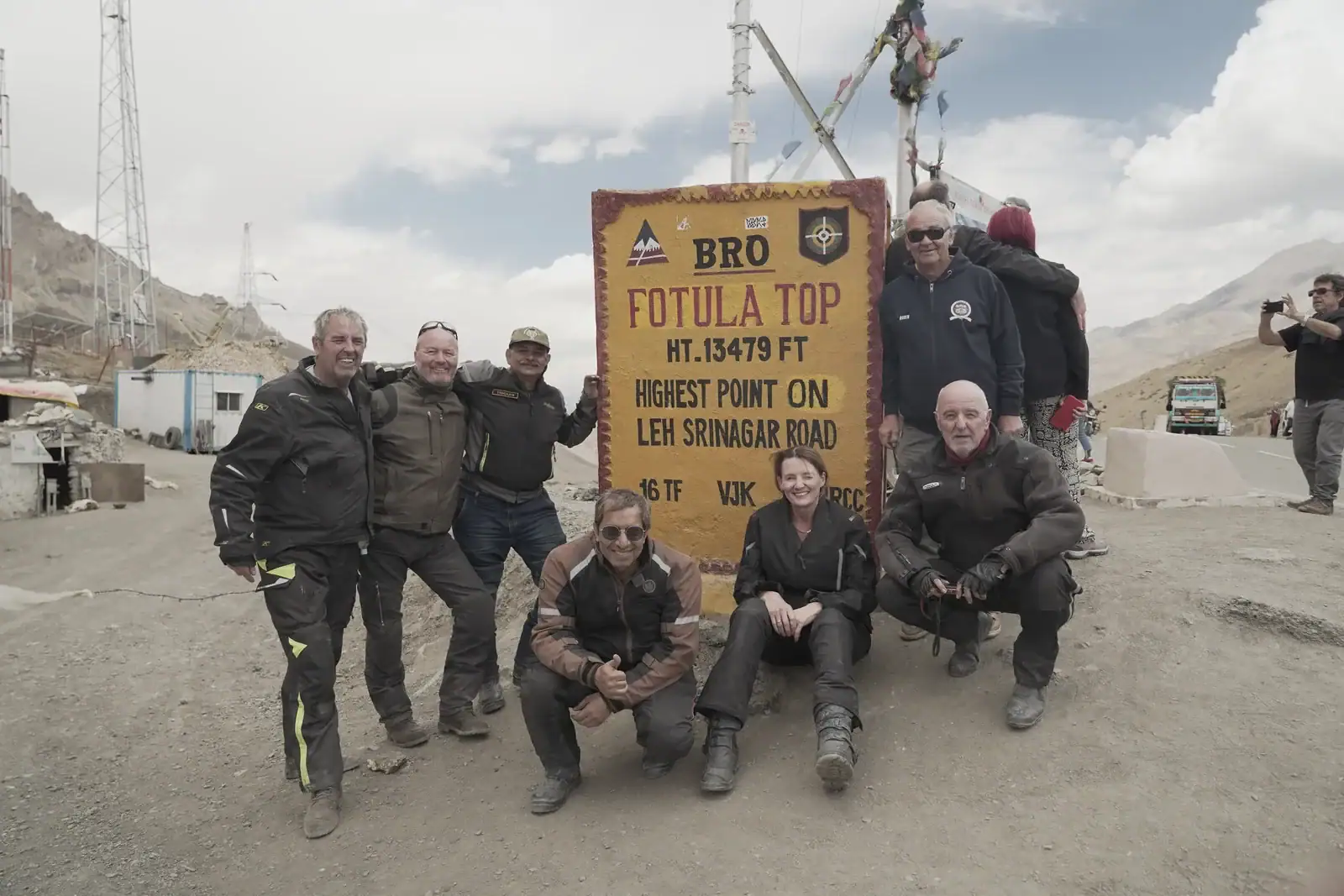
The second day takes you past the moonscape of Lamayuru and over Fotu La. At 13,478 ft, Fotu La is the highest point on the whole Srinagar to Leh highway. We checked rather than repeating the claim; Zoji La gets the reputation, Fotu La gets the altitude.
The real gift of this road is not the scenery, although there is plenty. It is the staircase. You sleep lower than Leh on the way up, and your body gets two days to notice that the oxygen is thinning before you ask it to live at 11,483 ft. Altitude sickness does not care how many miles you have ridden or how firm your handshake is. A slow climb is the cheapest insurance in the Himalaya.
Practical notes. The surface is technically the easiest of any Ladakh riding day. There is fuel, food and the best workshop capability between Srinagar and Leh at Kargil. This is also army country. Convoys have right of way, and there is no photography of military installations, checkposts, convoys or personnel, and no drones. Stop at the Kargil War Memorial at Drass. The jokes can wait an hour.
Manali to Leh: the one people put on T-shirts
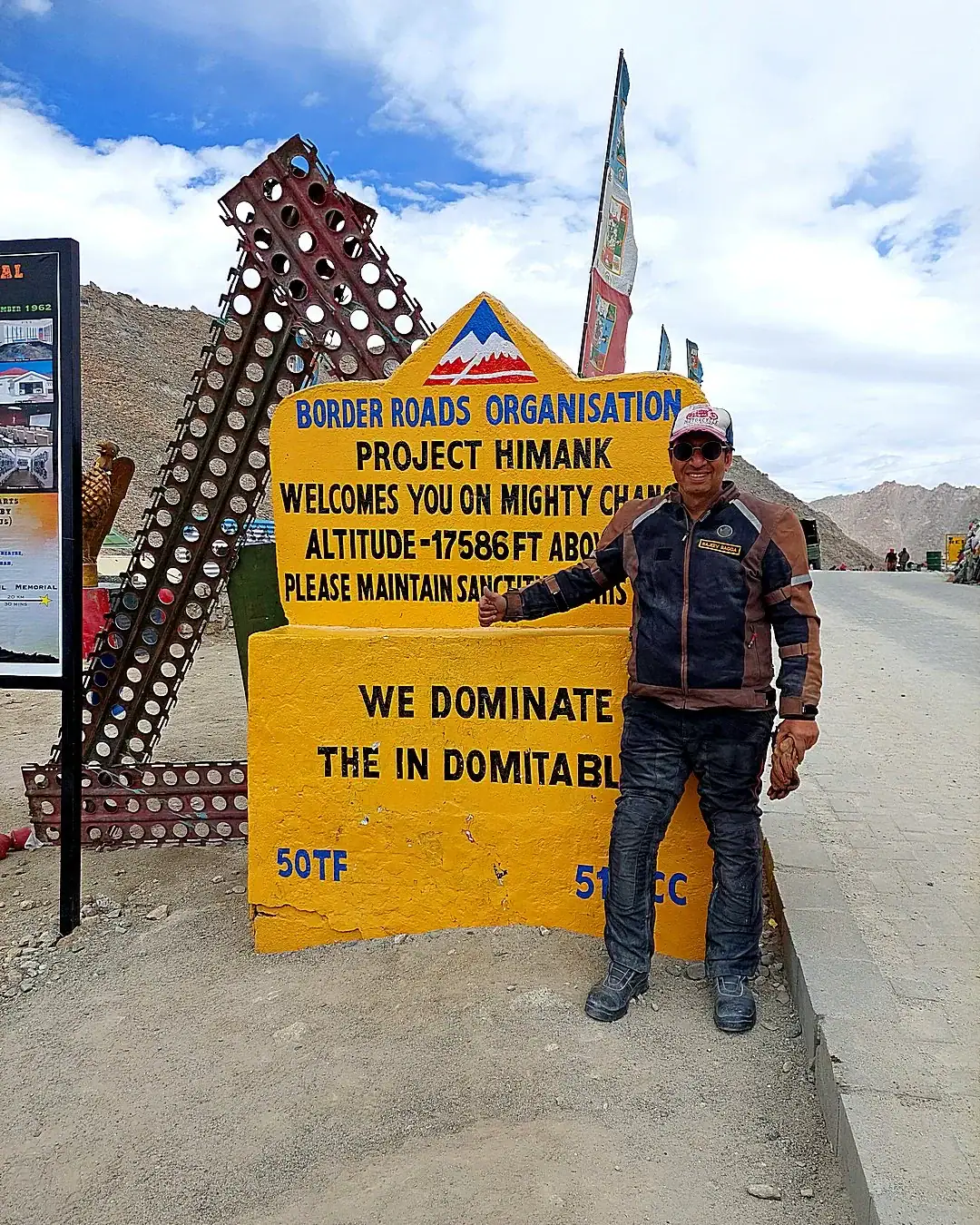
The Manali road is the famous one, and it earns it. Since the Atal Tunnel opened in October 2020 you no longer have to fight Rohtang to get out of the Kullu valley. You pop out in Lahaul and the real business begins: Baralacha La at 16,043 ft, the 21 hairpins of the Gata Loops, Nakee La, Lachulung La, the More Plains, and finally Tanglang La at 17,480 ft.
That list of passes should be read the way you would read a list of side effects.
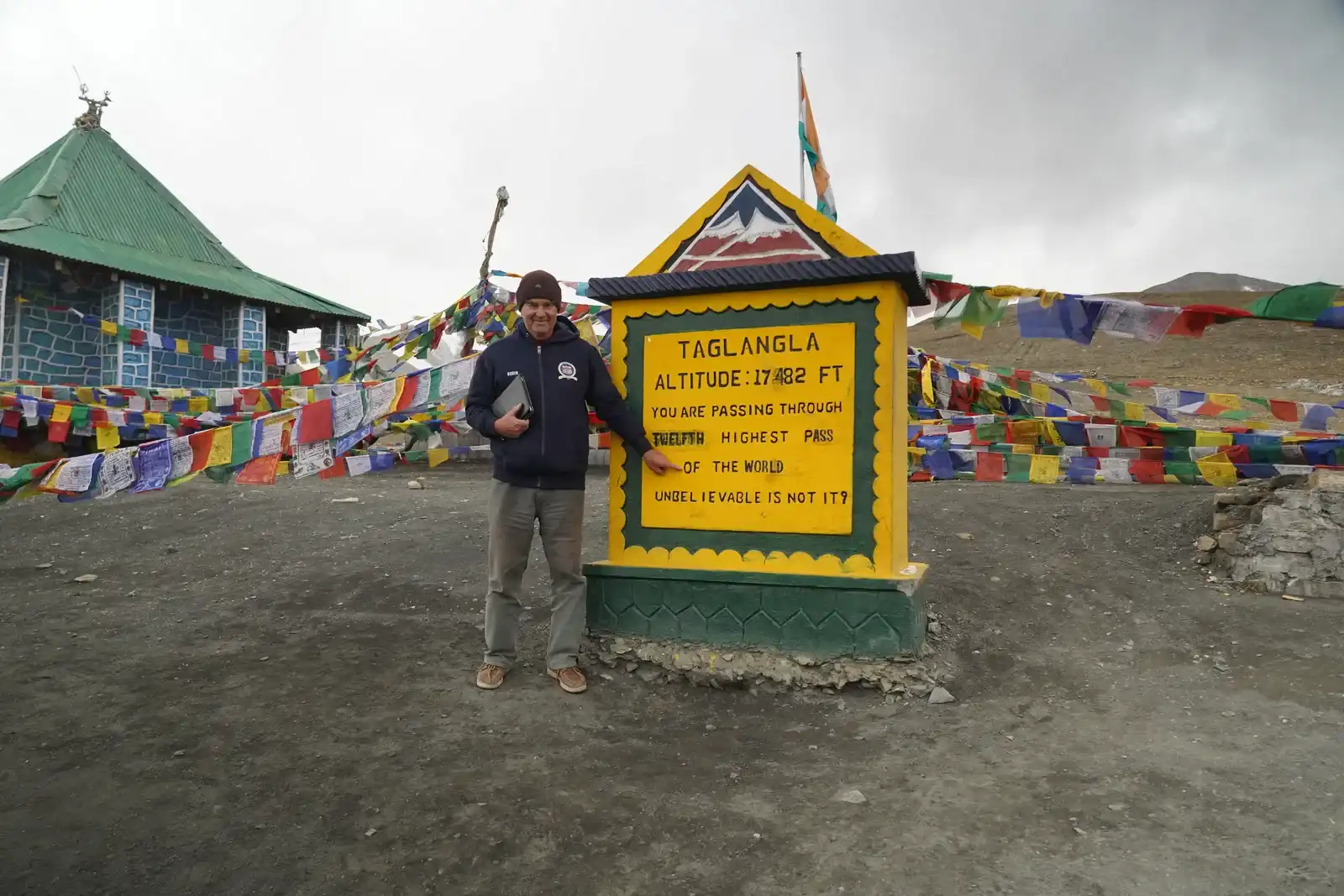
The trap is Sarchu. It sits at about 13,783 ft on the Himachal and Ladakh line, and many itineraries sleep there after crossing Baralacha La. You climb high and then sleep too high, and the headache arrives at two in the morning, when the nearest help is hours away. If you can, sleep at Jispa instead. At 10,500 ft it is a far kinder place to spend a night, with real hotels.
Then the fuel. There is no reliable pump between Tandi and Karu. Historically that was a gap of around 330 km with nothing but unofficial black fuel from jerry cans at Sarchu and Pang, at a price that reflects the view. Fill up, carry spare, and do not trust your gauge’s optimism.
And the weather. The Manali road routinely loses days to landslides, washouts and snow. Our Zanskar tour builds a spare day into Leh for exactly that reason. The mountain does not know about your flight.
Which is harder?
Manali, without much debate. It is higher, emptier, rougher, and it asks for a long day between Sarchu and Leh: roughly 253 km, three passes, nine to eleven hours in the saddle if everything goes well. Things do not always go well.
Srinagar is not easy. It is just honest about it. The difficulty arrives in smaller doses, and there is usually a town, a mechanic and a hot meal within reach when it does.
Which is better for acclimatization?
Srinagar. This is the part of the argument that is not really an argument. You climb gradually, you sleep low, and you reach Leh at a sensible altitude. On the Manali road you cross 16,000 ft before you have spent a single night above 11,000 ft, which is a bit like learning to swim by jumping off the ship.
If you ride in from Manali, give yourself a rest day in Leh before going any higher. If you do not, the altitude will schedule one for you, and it will not ask which day suits you.
When are the two roads open?
The Srinagar to Leh road usually opens in late April or early May and holds on into November. The Manali road opens later and typically closes around the second week of October. For the season month by month, read our earlier post, Best Time to Ride Ladakh.
Both roads are changing. The 13 km Zojila tunnel between Sonamarg and Drass hit breakthrough on June 9, 2026, and is targeted for early 2028. When it opens, the Srinagar side will care a great deal less about snow on Zoji La. Before you ride either road, sort your Ladakh permits.
So which one?
If you want my answer: ride in from Srinagar and out over Manali. You arrive acclimatized, and by the time you face Tanglang La and Baralacha La your body has had a week to get used to the idea.
Our tours ride both. Mission High-La takes the Srinagar to Leh highway out to Kargil, over Fotu La and back by Batalik. Zanskar: The Hidden Road leaves Zanskar over Shinku La and comes home to Leh along the high half of the Manali road, over four passes, with a spare day waiting at the end.
I am giving you principles, not prescriptions. The road will have its own opinion on the day. If you would rather borrow our scars than collect your own, the tours page is where to start.
As a motorcycle road trip, either road is worth the flight. The Zanskar Valley sits between the two, which is the case for our Zanskar motorcycle tour: it uses a piece of each.
Ready to ride? This is what Outriders does. Small groups, experienced lead riders, routes that don’t exist on package tours. See the Ladakh motorcycle tour →