Most South India motorcycle tours are sold on temples and beaches. Both are there, and both are lovely. Neither is the reason to ride here. The reason is the road between them, which climbs, drops, doubles back on itself seventy times and occasionally has an elephant standing on it.
In my book I wrote that South India gives you beaches, backwaters and wildlife that mostly doesn’t want to kill you. The word “mostly” is doing a lot of work in that sentence. More on that below.
Why a South India bike tour at all?
Ladakh is about thin air. South India is about thick air: warm, wet and full of things growing. You can start the morning at sea level and finish it in tea gardens above 2,000 m, without a headache, an oxygen cylinder or a lecture on acclimatization.
It also runs on the opposite calendar. The south is at its best from October to March, after the monsoon has gone and the roads have dried but the hills are still green. That is exactly when the high Himalayan passes are under snow.
The ghats: where the hairpins live
South India is a plateau, the Deccan, fenced in by two mountain walls, the Western and Eastern Ghats. Every time you cross one, the road turns into a coil of spring.
The famous one is Kolli Hills in Tamil Nadu: 70 numbered hairpin bends on a road of about 46.7 km. Seventy is a lot of bends. Somewhere around number 40 your clutch hand starts filing a formal complaint.
The steep one is Kalhatty, 36 hairpins in about 30 km between Masinagudi and Ooty. It is steep enough that the authorities closed it to tourist vehicles in 2026, so check before you plan around it. And the wet one is the Agumbe ghat in Karnataka, which climbs into a rainforest that grows king cobras. You do not stop for a picnic.
A Kerala motorcycle trip, and the theology of buses
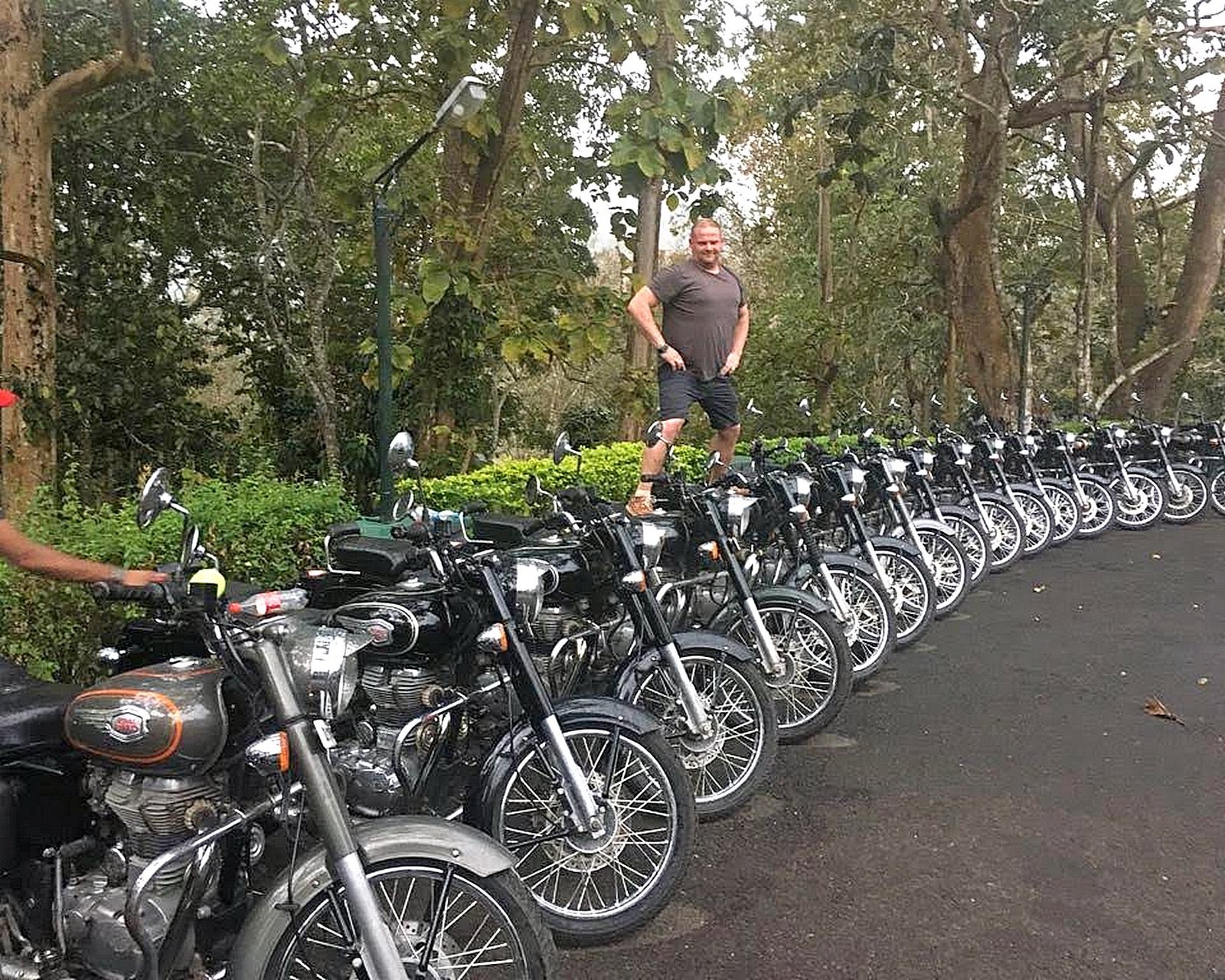
I rode from Kochi to Munnar, which climbs from sea level into the tea hills. The road narrows, the curves tighten, and the traffic does not thin out. It just gets more varied: tea trucks, tourist buses, and families of four on one motorcycle.
Kerala’s state buses deserve a paragraph of their own, and they got one, in God’s Own Traffic. The short version: you give them the road, all of it, and you start praying to gods you had not previously believed in.
The wildlife is not decoration
The highways between Mysuru, Ooty and Wayanad run straight through the Bandipur and Mudumalai tiger reserves. Elephants use the road. So do gaur, deer and, now and then, something with stripes. Since 2009 the Bandipur stretches have been closed to traffic at night, from 9 pm to 6 am, because too many animals were dying under wheels.
On a motorcycle you want to be through well before dark anyway. An elephant in South India once chased me with what I can only describe as focused intent to end my existence. The rule I took away is short: if an elephant is on the road, it is the elephant’s road. Wait.
Motorcycle tours South India: the paperwork
What you do need, as a foreign rider, is your home licence plus an international driving permit that covers geared motorcycles. Royal Enfield asks foreign riders for exactly that: passport, visa and the permit. Get it at home before you fly; India issues them only to holders of an Indian licence.
Two wheels or four
Our own South India tour, the Deccan Traverse, now runs mostly in Mahindra Thar 4x4s: about 1,900 km in 14 days, from the shore temples at Mahabalipuram, through the Nilgiri tiger country and the Agumbe rainforest, to the Goan coast. Riders who would rather do it on a motorcycle ride alongside.
Most southern India tours are done from a coach window, with the road as the boring bit between the sights. Ours does it the other way round. The temples will still be there. The road is the point.
It finishes on the Goa coast. If you have a day to spare, the ride south to Gokarna is about 150 km and a lesson in what happens to a beach once it gets famous. That one is in Goa to Gokarna.
Ready to ride? This is what Outriders does. Experienced lead riders, routes that don’t exist on package tours. See the South India tour →